Why Buyers Feel Satisfied and Regretful About the Same Purchase
By Dino Correia, Founder, Agaya Cloud
You want something, you buy it, you’re happy - that’s supposed to be the happy path. A study of luxury shoppers found it isn’t, for a lot of people.
What psychologists call post-purchase regret, most people just know as buyer’s remorse.
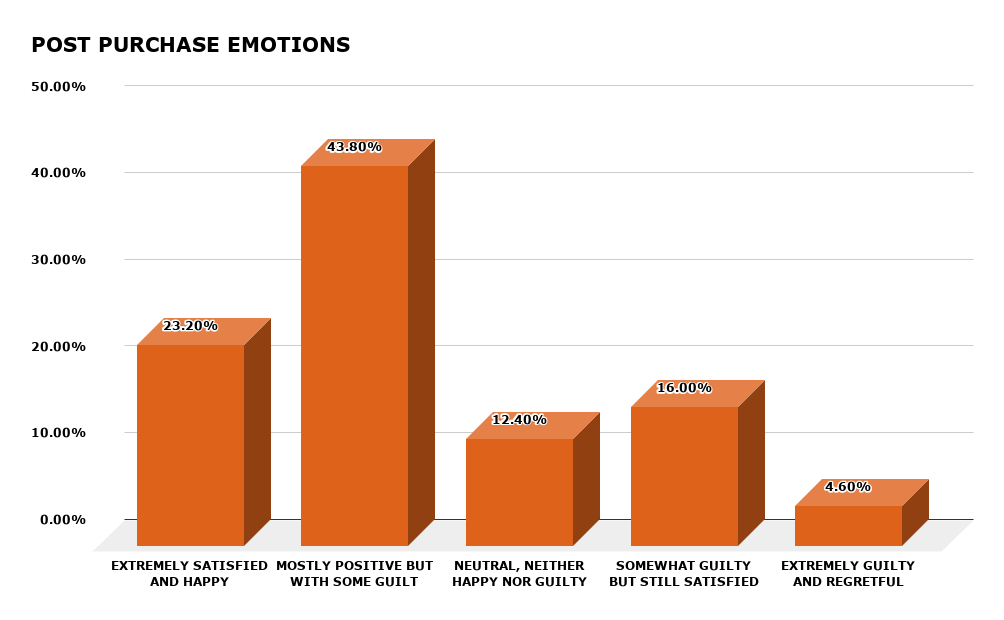
Of those surveyed, 55.7% said they were satisfied with a recent luxury purchase and regretted it, at the same time. Satisfaction and regret aren’t opposites here. They’re sitting in the same person, about the same box.
Look closer and the split gets more textured. About 44% described feeling mostly positive but a little guilty. Another 23% called themselves extremely satisfied with no guilt at all. Same category of purchase, same price range, two different emotional outcomes depending on the buyer.
Where the regret comes from
The study, run by researchers at Kristu Jayanti University and published by Springer, traces the regret to a handful of familiar pressures.
Cognitive dissonance - the discomfort of holding two conflicting beliefs at once, in this case “I made a smart purchase” and “this wasn’t worth it” - shows up when the product falls short of the expectation built before the sale.
Social influence sharpens it: a friend’s opinion, a comparison on social media, a slightly better version spotted at another brand. Financial stress adds its own weight, since the higher the price, the more a buyer second-guesses the decision afterward. Plain preference drift plays a part too - a purchase that felt right in spring can look like a mistake by summer, no fault of the product.
Age matters more than any single factor above. Most of the study’s respondents were 18 to 25, and that group reported the most regret by a wide margin, buying under the pull of trends and peers rather than settled taste. Buyers over 40, a smaller share of the sample, spent more deliberately and came away more satisfied. A sample this young-skewed isn’t the whole luxury market, but the underlying pattern (impulse buyers regret more, considered buyers regret less) is consistent with older consumer behaviour research too.
How shoppers talk themselves back to feeling good
Regret doesn’t just sit there; people work on it. Some of that work is internal: telling yourself the piece is well-made, rare, or worth it for how it makes you feel. Some of it is social: asking a partner whether the purchase was a good idea, reading other buyers’ reviews, or simply returning the item. Get the rationalizing to stick, and satisfaction holds. Don’t, and the brand quietly loses a repeat customer.
The numbers back that up: 51% of respondents said a positive past luxury-purchase experience makes them more likely to buy again. Only 19.6% disagreed - a smaller group, but presumably the one still carrying regret nobody addressed.
Return policies help, but they’re not the whole answer
Asked whether generous return policies ease the regret, 44.4% agreed. That’s meaningful, not overwhelming. A third sat neutral. That neutral third isn’t a lost cause - it’s a group that hasn’t been convinced either way, which is a more useful place to start from than a group that’s actively unhappy.
What this means for a brand
Most of the regret in this study traces back to a gap between what was promised and what showed up, so accurate expectations before the sale matter more than most brands treat them. So do return terms that hold up in practice, not just ones that read well on a policy page. But the bigger miss is simpler: almost nobody asks how someone actually feels once the box is open, because the sale gets treated as the finish line instead of the halfway point.
That’s the part most brands skip, not because it doesn’t matter, but because nothing in a typical order flow asks the question. Regret doesn’t show up in a sales report. It only shows up when someone measures it directly, after delivery, while there’s still a next order to save.
TrueSignal asks customers how they feel about a purchase after it arrives - satisfaction, regret, and reorder intent, tied to the specific product they bought. See how TrueSignal works.
TrueSignal
See what happens after delivery.
Connect Shopify, or add a product and use a QR code - start collecting SKU-level post-purchase feedback today.
See TrueSignalShare